Mary discovers she may be Amy Hide
Other PeopleThe discovery that Mary Lamb / Amy Hide may be Amy Hide begins with a letter and ends, for the moment, in silence. A pink sheet, a photograph, and a short account of a missing woman turn an abstract question about identity into a personal one: Mary sees her own face in the image, yet cannot reconcile it with the person she believes herself to be. The revelation offers a possible past without restoring her memory or resolving who she is.
The letter arrives
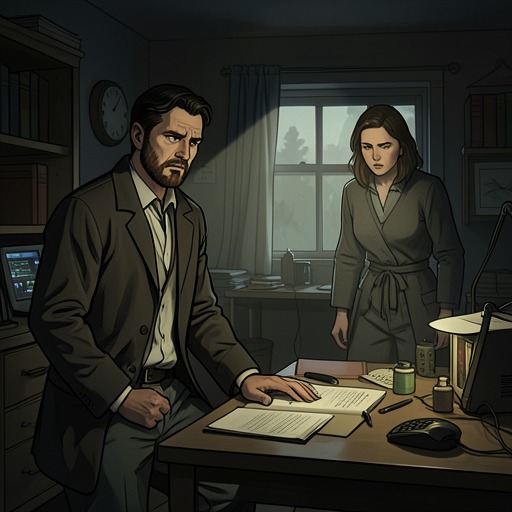
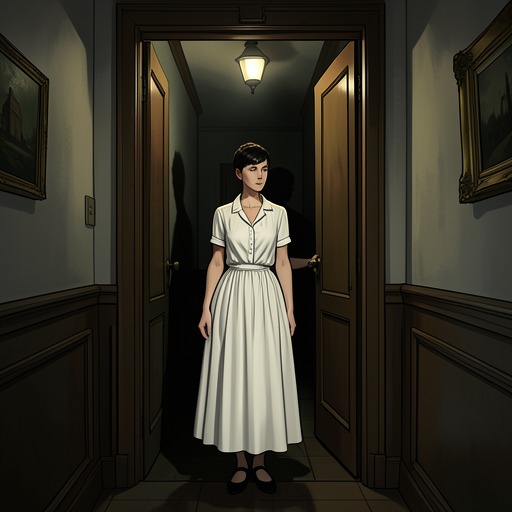
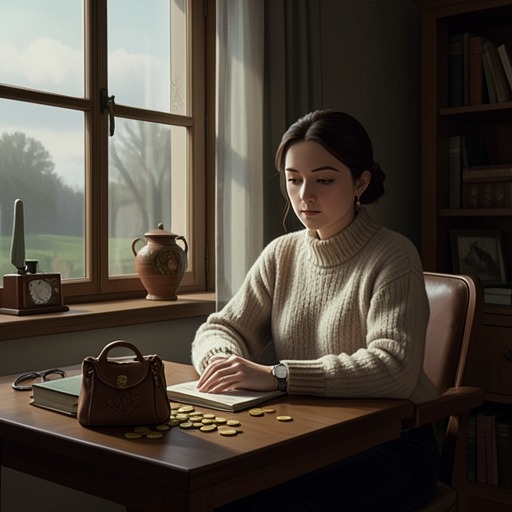
The letter comes on the seventh day. Trudy brings it to Mary as she sits with her morning tea, and the name and address on the envelope persuade Mary that it is meant for her. The delay matters: Mary has spent the preceding days without news about herself, and now a piece of correspondence appears to promise an answer. Its instruction, written in small black letters on the reverse, is that she should be alone when she opens it. Trudy recognizes the significance of the message and responds bitterly.
Mary goes downstairs to her bed before opening the envelope. The task unsettles her more than she expects. She tries to handle the paper calmly, but the envelope moves in her hands and acquires small tears as she struggles to free the letter. When she loses her nerve, she pulls it out roughly, tearing it across the middle. She then places the two pink pieces together on the blanket. The damaged letter is not merely a container for information: the difficulty of opening it, and the tear through its center, make the arrival of the past a physical and imperfect process.
What John Prince's letter reveals
The message is signed by John Prince. He addresses Mary as Miss Lamb but questions whether that name is accurate, explaining that he believes he has seen her before and asking whether she remembers him. He allows that he could be mistaken, but says he will investigate and contact her again. His letter therefore presents recognition as a possibility, not a settled identification. It makes Mary the subject of someone else's inquiry before she can supply any memory of her own.
Mary reads the letter several times without understanding it. Only when she turns over the bottom half of the pink sheet does she find the additional information: a girl called Amy Hide, aged twenty-six and listed as five feet seven inches tall, dark, British, with no distinguishing feature recorded, has recently become a missing person. The police suspect that Amy was murdered, though they are not certain. This transforms Prince's uncertainty about Mary's name into a far more consequential possibility. If the identification is right, Mary may be a woman whose disappearance is already being treated as a possible death; if it is wrong, the letter has nevertheless placed that prospect before her.
The photograph and the question of identity
The photograph on the reverse of the upper half of the letter supplies the sharpest evidence. Mary sees the girl pictured there and recognizes herself. The recognition is immediate enough to make the image seem decisive, but it does not make the identity easy to accept: Mary asks herself whether it really is her, then acknowledges that it is. The difference between seeing a likeness and knowing a life remains unresolved. The photograph shows a face, not the memories that would explain it.
Later, Mary compares the photograph with her reflection in the basement bathroom, holding the pink letter beside her face beneath a bare lightbulb. She judges the photographed face to be older than her present one. The mole beneath the right temple appears on the opposite side, while the mouth and eyes also seem unlike hers. These perceived differences make the image both familiar and alien. Mary does not dismiss the resemblance; instead, she searches it for signs of what she might have been. The photograph thus works in two directions at once: it connects her to Amy Hide, and it makes her feel estranged from the person in the image.
That estrangement touches Mary's moral sense of self as well as her uncertainty about the past. She has thought of her own face as belonging to someone good, whereas she reads the photographed face as bearing a different, more knowing quality. The evidence does not establish what Amy did or what her life contained. It establishes only the disturbing gap between Mary's reassuring idea of herself and the older identity the photograph seems to offer. Her anguished question about what she may have done expresses that gap, not a recovered memory or a confirmed confession.
An unresolved revelation
The discovery leaves Mary with a lead but no confirmation. Prince promises to look into the matter and be in touch, yet no further news comes during the period described. Mary waits each morning for information about herself, and the waiting becomes the immediate consequence of the letter: the possibility of an answer has arrived, but the answer has not.
The episode also develops the book's connection between memory and personal identity through a stark contrast in forms of knowledge. Mary has previously understood that a memory game is involved, but cannot play it; now an external document supplies a name, biographical particulars, and a photograph without giving her access to the experience behind them. The letter can propose that Mary and Amy are the same person, while Mary remains unable to remember being Amy. Its torn pages and divided contents delay and stage the revelation, but do not complete it. At the end of the episode, the photograph has changed what Mary can imagine about herself, while the absence of follow-up leaves the central question open.